- Historical
- 2026-05-06
Standing before the last remaining Wonder of the Ancient World on the edge of the Sahara Desert, the Pyramids of Giza are more than just tombs; they are the ultimate testament to human ambition and engineering.
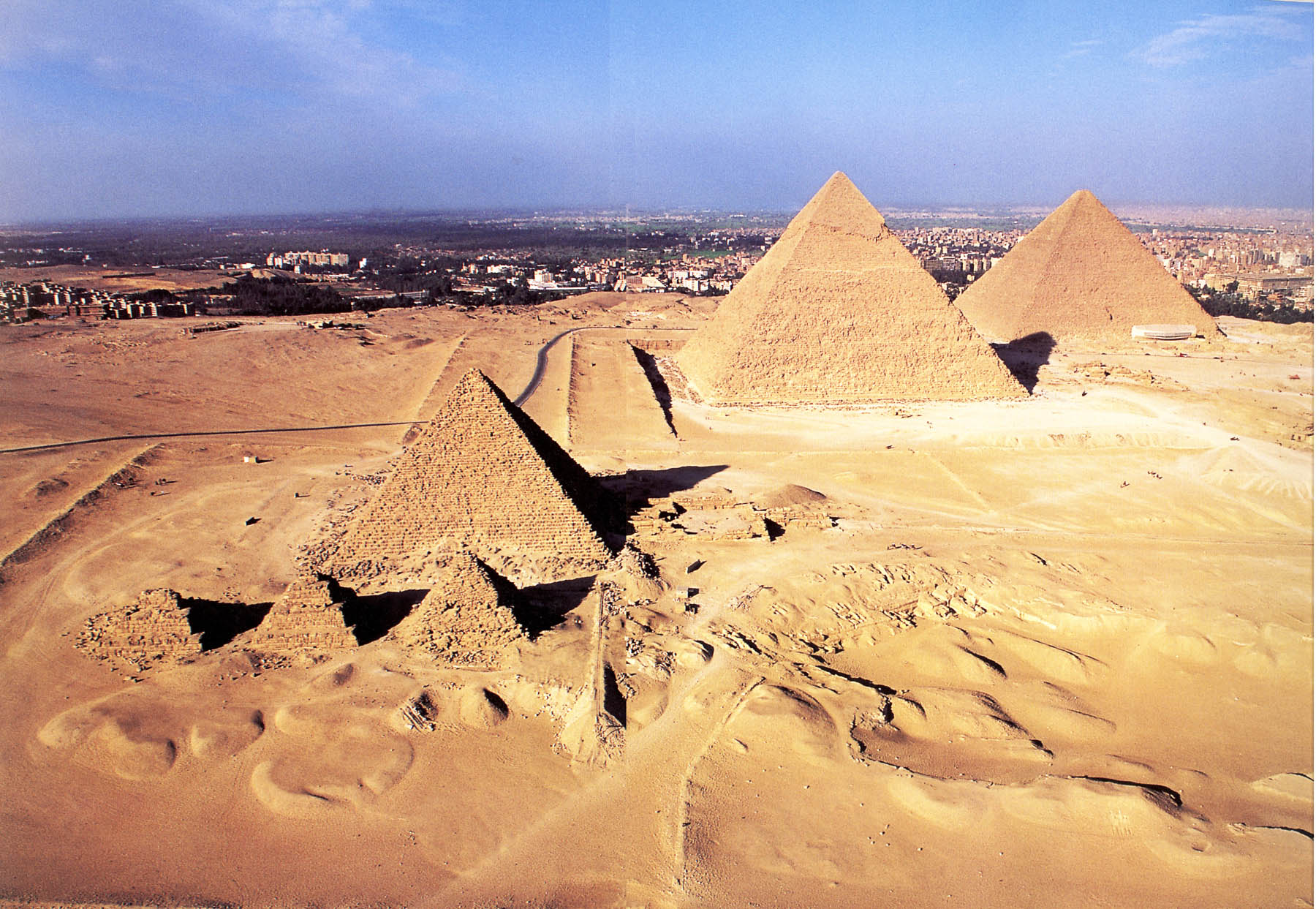
The Great Pyramids Of Giza
The Giza Necropolis was built during the Fourth Dynasty of the Old Kingdom (roughly 2600–2500 BC). It was designed as a "City of the Dead" for three successive pharaohs: Khufu, Khafre, and Menkaure.
Contrary to popular myths, the pyramids were built by a highly organized workforce of roughly 20,000 to 40,000 skilled laborers, not slaves.
The pyramids are aligned almost perfectly with the four cardinal points (North, South, East, West) with an error of less than 0.05 degrees.
Originally, they were encased in polished white Tura limestone, which would have reflected the sun and made them shine like giant jewels in the desert.
The Great Pyramid (Khufu / Cheops)
The oldest and largest of the three, the Great Pyramid is the only one of the Seven Wonders of the Ancient World still standing today.
Originally 146.6 meters tall (now 138 meters), it held the record for the world’s tallest man-made structure for over 3,800 years.
It contains an estimated 2.3 million limestone blocks, each weighing between 2.5 and 15 tons.
A breathtaking, 47-meter-long corbelled hallway that leads deep into the structure.
The King’s Chamber Constructed entirely of massive red granite blocks from Aswan. It contains a lidless sarcophagus made of a single block of granite.
The Relieving Chambers are Five small rooms above the King’s Chamber designed to distribute the weight of the pyramid and prevent it from collapsing.
The Pyramid of Khafre (Chefren)
Khafre was the son of Khufu. His pyramid often confuses visitors because it appears taller than the Great Pyramid.
• The Optical Illusion: It is built on a 10-meter higher bedrock foundation and has a steeper slope, giving it a more imposing presence.
• The Casing: Khafre’s pyramid is easily recognizable because it is the only one that still retains its original limestone casing stones at the very peak (the apex).
• The Sphinx Connection: Khafre’s complex includes the Great Sphinx, which was carved from a single outcrop of limestone and is believed to represent the face of Khafre himself, guarding his tomb.
• The Interior: The layout is simpler than Khufu’s, with a single burial chamber and two entrances one at the base and one roughly 11 meters up the face.
The Pyramid of Menkaure (Mycerinus)
The smallest of the three main pyramids, it represents a shift in the pharaonic priorities or perhaps a period of economic tightening.
• Stats: It stands at roughly 61 meters tall (originally 65.5 meters).
• Unique Feature: While the upper part was cased in Tura limestone, the bottom 16 courses were encased in unpolished red granite. This creates a beautiful two-tone aesthetic that survives today.
• The Scar: On the north face, there is a large vertical gash. This was caused in the 12th century when the Sultan of Egypt attempted to dismantle the pyramid after eight months of hard labor, his workers could only remove one or two stones a day and eventually gave up.
• The Sarcophagus Mystery: In 1837, a beautiful basalt sarcophagus was found inside, but it was lost at sea near Spain while being shipped to the British Museum.
The Egyptian government has completed a massive $51 million overhaul to make the site more sustainable and visitor-friendly.
The Electric Shuttle System Private cars and chaotic microbuses are a thing of the past. Visitors now navigate the plateau on sleek electric shuttle buses. This keeps the air clean around the monuments and makes hopping between the Great Pyramid, the Panorama Viewpoint, and the Sphinx effortless.
Digital Entry Gone are the days of paper-only tickets and long physical queues.
You can now book everything from site entry to interior pyramid passes online or at digital kiosks at the new King Khufu Visitor Center.
The "Secret" Corridor Keep an eye on the news! 2026 has been the year of the "New Corridor" announcement. Using muon radiography, scientists have identified a 30-meter hidden passage behind the North Face of the Great Pyramid, sparking new theories about Khufu’s actual burial chamber.
Ready to answer the call of the Pharaohs? Visit us at www.redrosetours.com to book your Egypt memorable trip.