- Historical
- 2026-05-17
Planning a trip to Egypt? Red Rose Travel breaks down everything you need to know about visiting the breathtaking twin temples of Abu Simbel, built by Pharaoh Ramesses II for himself and his beloved Queen.
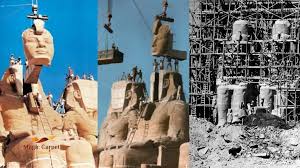
Everything You Need to Know About the Temples of Ramesses II and Nefertari
The story of Abu Simbel is divided into two distinct chapters: its construction in antiquity as a symbol of absolute power, and its miraculous rescue in the 20th century, which remains one of the greatest engineering feats in modern history.
Abu Simbel was commissioned by Pharaoh Ramesses II (often called Ramesses the Great), who ruled during the 19th Dynasty of Egypt's New Kingdom. Construction began around 1264 BCE and took about 20 years to complete, finishing around 1244 BCE.
Ramesses II was a master of propaganda, and Abu Simbel was designed to serve three major purposes:
To Commemorate Victory:
It celebrated his victory at the famous Battle of Kadesh against the Hittites. Inside the Great Temple, the walls are covered in detailed reliefs showing the Pharaoh charging into battle.
To Intimidate Rivals:
Located in Nubia (southern Egypt/northern Sudan), the temples served as a massive, unmissable warning to southern neighbors of the immense power and wealth of the Egyptian empire.
An Eternal Tribute to Love:
By building the second, smaller temple for his Chief Wife, Queen Nefertari, he permanently elevated her status. It is one of the very few instances in Egyptian history where a queen's monument matches the grandeur of the pharaoh's.
Lost to the Sands
As the centuries passed and the seat of Egyptian power shifted, the temples were eventually abandoned. Over time, the desert sands swallowed them up. By the 6th century BCE, the sand covered the statues of the Great Temple up to their knees. The site was completely forgotten by the western world until 1813, when Swiss explorer Jean-Louis Burckhardt rediscovered the top frieze of the main temple.
By the mid-20th century, Abu Simbel faced total destruction. In 1959, the Egyptian government began planning the construction of the Aswan High Dam. While the dam was vital for controlling Nile floods and generating electricity, it meant creating a massive reservoir (Lake Nasser) that would completely submerge Abu Simbel and several other Nubian monuments.
The UNESCO International Campaign Recognizing that a priceless piece of human heritage was about to be lost forever, UNESCO launched an unprecedented international rescue campaign in 1960.
A coalition of over 50 countries contributed financially and expertise-wise to the project, making it a true global effort.
A consortium of international engineering firms, spearheaded by Egyptian, Swedish, Italian, German, and French experts, worked alongside thousands of Egyptian laborers.
Moving the temples was a mind-boggling engineering challenge because they weren't built out of stone blocks they were carved directly into a sandstone mountain.
Engineers carefully sawed the entire temple complex, including the colossal statues, into 1,035 massive blocks. Each block weighed between 20 and 30 tons. Using heavy cranes and precise mathematical calculations, these blocks were lifted 65 meters (213 feet) higher up the cliffside and moved 200 meters (656 feet) back from the encroaching water line.
The blocks were put back together like a giant, 3D jigsaw puzzle. To recreate the original look, a massive, hollow concrete dome was built over the temples, which was then covered in rocks and sand to mimic the original natural mountain.
Preserving the Sacred Alignment
The engineers were so precise that they even preserved the famous Solar Alignment. Twice a year, the sun still penetrates the inner sanctuary to light up Ramesses' statue though, due to the shift in location, the event now happens exactly one day later than it did in antiquity (on February 22 and October 22 instead of the 21st).
Today, when the guests stand before Abu Simbel, they are looking at a monument that was saved by the unity of the modern world!
Abu Simbel consists of two massive rock-cut temples commissioned during the Golden Age of the New Kingdom.
The Great Temple of Ramesses II
The main temple was designed to project absolute power. Guarding the entrance are four colossal, 20-meter-high statues of Ramesses II himself, seated on his throne.
The temple is precisely engineered so that twice a year on February 22 (the anniversary of his ascension to the throne) and October 22 (his birthday) the morning sun shines directly through the entrance, piercing the darkness of the inner sanctuary to illuminate the statues of the gods and Ramesses himself.
The Small Temple of Nefertari
Just a short walk away sits the Small Temple, and it is incredibly unique. Ramesses II dedicated this temple to Queen Nefertari, his favorite and most beloved wife, associated with the goddess Hathor.
In ancient Egyptian art, queens were almost always depicted as tiny figures next to the pharaoh's legs. At Abu Simbel, however, Ramesses had Nefertari’s statues carved to the exact same size as his own a profound statement of his love and respect for her.
The Modern Miracle The Great Relocation
As incredible as its ancient history is, Abu Simbel’s modern history is just as mind-blowing. In the 1960s, the construction of the Aswan High Dam threatened to submerge the temples forever under the rising waters of Lake Nasser.
In a race against time, UNESCO launched one of the greatest archaeological rescue operations in human history:
The entire mountain was carefully dismantled.
The temples were cut into massive blocks (some weighing up to 30 tons).
They were moved 65 meters higher up the cliff and 200 meters back from the water, reassembled perfectly inside an artificial concrete mountain.
When you stand there today, the reconstruction is so seamless you would never know it was moved.