- Historical
- 2026-05-04
While Cairo is the heart and Luxor is the soul, Alexandria is Egypt’s elegant face to the Mediterranean. Founded by Alexander the Great in 331 BC, it has served as a global center of culture and science for centuries. In 2026, Alexandria remains a refreshing escape, offering a unique blend of Greco-Roman history and a breezy, cosmopolitan vibe.
The Corniche is the city’s lifeline, a scenic promenade stretching along the Mediterranean coast.
Discover Alexandria The Pearl of the Mediterranean
Alexandria: The Pearl of the Mediterranean
Alexandria consider as the first port in Egypt and the second big city of Egypt.
Founded by Alexander the Great in 331 BCE, Alexandria was once the intellectual and cultural heart of the ancient world. While the lighthouse and the Great Library are lost to time, the city’s salty breeze still carries the weight of empires—from the Ptolemies and Romans to the cosmopolitan "Golden Era" of the early 20th century.
The Ancient Echoes
Alexandria’s history is built in layers, many of which are now underwater or tucked beneath modern streets.
Kom El Shoqafa Catacombs
A stunning blend of Egyptian, Greek, and Roman architectural styles. This multi-level subterranean necropolis features a spiral staircase that leads deep into the earth, where statues of Egyptian gods wear Roman armor.
Pompey’s Pillar
Contrary to its name, this massive red Aswan granite column was actually built for Emperor Diocletian. It stands as one of the largest monolithic columns ever erected.
The New Library
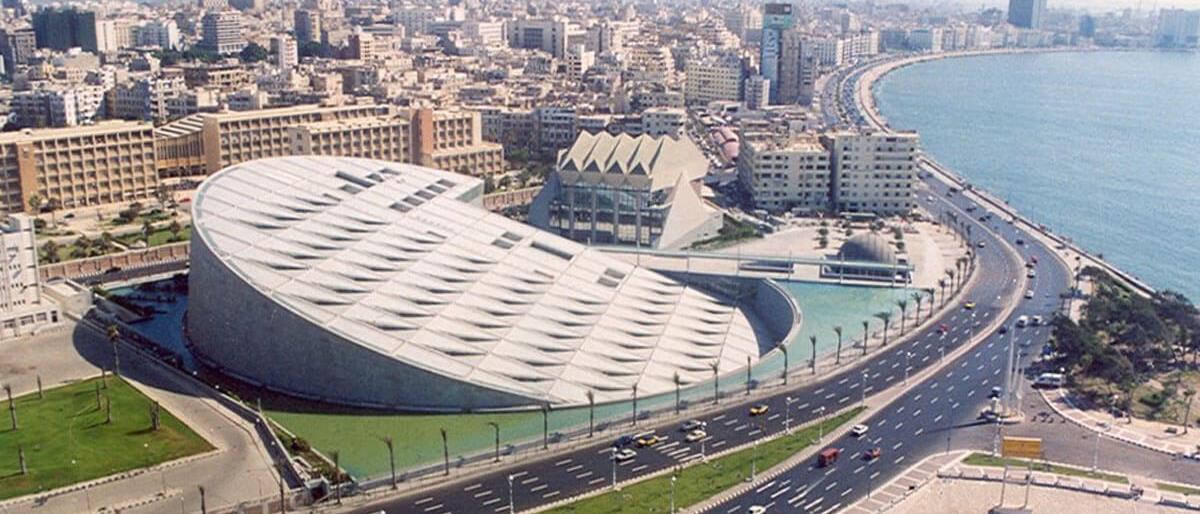
Bibliotheca Alexandrina
A modern tribute to the ancient Great Library of Alexandria, this building is an architectural masterpiece of the 21st century.
The Experience: Beyond millions of books, the complex houses four museums and a planetarium. Don't miss the Antiquities Museum, which displays artifacts pulled directly from the Mediterranean seabed.
The Bibliotheca Alexandrina: A modern architectural marvel designed to commemorate the original Great Library. Its sun-disk shape and granite walls carved with characters from 120 different scripts make it a world-class center for learning and culture.
The Roman Amphitheatre (Kom El Deka)
This well-preserved marble theater was discovered by accident in the 1960s. Nearby, you can find the "Villa of the Birds," featuring exquisite Roman mosaics.
Citadel of Qaitbay The Guardian of the Coast
This 15th-century fortress stands on the exact site of the ancient Pharos (Lighthouse) of Alexandria. To build it, Sultan Qaitbay used salvaged stones from the lighthouse ruins, meaning you are literally walking through a Wonder of the Ancient World.
Montaza Palace Gardens
Set on 150 acres, these lush gardens surround the Al-Haramlik Palace. While the palace interior is often closed to the public, the grounds and the "Tea Island" offer the best coastal views in the city.
Abu al-Abbas al-Mursi Mosque
The most beautiful mosque in the city, featuring intricate cream-colored stonework and four towering domes. It is a masterpiece of Islamic architecture and the spiritual heart of the city.
The Lighthouse Returns (2026 Update)
In early 2026, a major archaeological mission successfully raised 80-ton granite blocks from the Eastern Harbor. These massive lintels and thresholds belonged to the original entrance of the Pharos Lighthouse. While you can't visit the underwater site, the Citadel of Qaitbay remains the best place to stand and see where these stones are being cataloged for future museum display.
The Moharam Bek Discovery
Just this month (May 2026), archaeologists unearthed a Ptolemaic circular bathhouse and a Roman villa with stunning mosaic floors in the heart of the city. It proves that Alexandria still hides a "complete cultural sequence" beneath its modern apartment blocks.
The Graeco-Roman Museum: After a massive renovation, this is the city's crown jewel. It houses the "Tanagra" figurines and the black basalt statue of the Apis bull, offering the most comprehensive look at the city Cleopatra knew.
Ready to answer the call of the Pharaohs? Visit us at www.redrosetours.com to book your Egypt memorable trip.